Apple iPhone 5
- 2012
- Phone
- back-side illuminated sensor
- 8 MP
- 112 g

Camera Signature
297 photos · 56 photographersWarm · Vivid · Low-key
- #292321, 30%
- #787063, 27%
- #cbc8c3, 21%
- #c0a363, 8%
- #974933, 8%
- #5b6d96, 5%
ToneShadows 40%Highs 21%Tonal histogram: 40% shadows, 39% midtones, 21% highlights.
Colour
Typical settingsISO 80f/2.44 mm
The read compares this camera with the rest of the catalog.Full Signature ↓
The Reflectr read
The iPhone 5 is an 8 MP phone camera that, in good light, gets close to a pocket compact and is always with you. It offers no manual control and no optical zoom, and it works best when the light is generous.
Based on 297 photographs by 56 photographers on Reflectr and 8 cited sources. Updated November 2026.
How its photographs look
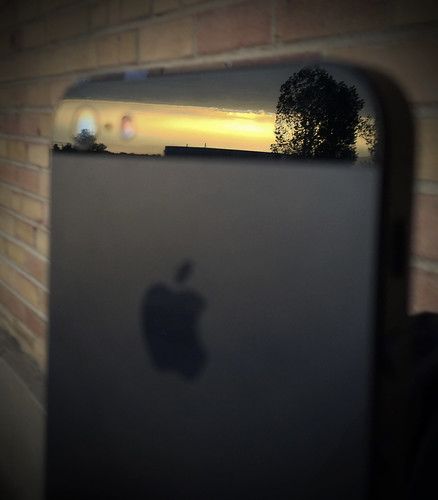
Photographs made with it on Reflectr tend to be warm and fairly vivid: warmth sits at 0.32 and saturation at 0.22, both above most cameras in the catalogue, with a slight lean towards magenta (tint 0.15). Brightness is typical (mean 0.43) but contrast is high at 0.82, with 40% of pixels in the shadows, 39% in the midtones and 21% in the highlights, and only 1% each of pure black and pure white. The palette is dominated by dark browns and warm greys, with a sandy yellow, a brick red and a muted blue as accents. Its owners shoot almost entirely at base settings: median ISO 80, with 79% of frames at ISO 400 or below and none above ISO 3200. Every photograph in the sample used the single 4.12mm f/2.4 back camera, a wide view of about 4 mm in the sample's own equivalent figures, with a median shutter speed of 1/30 s.
What it does best
- Accurate exposure in bright lightDPReview found exposure was almost always completely accurate in bright conditions, and that HDR shots could rival many proper cameras1. The photographs here, mostly at ISO 80, fit that use.
- Panoramas of impressive sizeDPReview called the panorama mode almost flawless when panning was smooth, with images reaching about 28MP1.
- Quick, always-available shootingReviewers praised the faster shot-to-shot speed over the iPhone 4S, and Pocket-lint called it a take-anywhere camera that is hard to tell from many compacts in good light23. Immediate sharing is something standalone cameras could not match2.
Where it falls short
- High-ISO quality falls awayPocket-lint said quality at high ISO jumps off a virtual cliff2, and DPReview noted luminance noise in plain tones even at ISO 501. Opinion on low-light gains over the 4S was split46.
- Flare and weak flashDPReview listed lens flare from lights at or just outside the frame and poor flash performance in low light as weaknesses1. Sources disagreed on how serious the purple haze flare is178.
- No manual controls or zoomDPReview noted manual white balance and exposure compensation were missing5, and Pocket-lint cited the lack of optical zoom, stabilisation and manual control2.
- Live view crops the frameDPReview said the live view showed only 88% of the actual vertical image area, which it called a framing problem1.
Who the iPhone 5 is for
It suits someone who wants a capable everyday camera in a phone and mostly shoots outdoors or in well-lit rooms, then shares the results straight away. Jeremy Horwitz called it as close to a pocket digital camera replacement as anything Apple had released4. Those who need optical zoom, image stabilisation or manual control, or who often shoot in dim light, would be better served by a dedicated high-end compact2. Anyone upgrading from the iPhone 4S should expect little difference in image quality56.
A competent, quick point-and-shoot for good light, held back by noise, flare and a lack of control. It is a phone before a camera, as Pocket-lint put it2, and it behaves like one.
Sources
- 1Apple iPhone 5 Camera Review · dpreview.com
- 2iPhone 5 camera review · pocket-lint.com
- 3iPhone 5 camera review · imore.com
- 4iPhone 5 Camera · mjtsai.com
- 5Apple iPhone 5 · dpreview.com
- 6Apple iPhone 5 review: Laws of attraction · gsmarena.com
- 7iPhone 5 review · techradar.com
- 8iPhone 5 Camera Review · photographylife.com