 Remove
Side by side
Nikon D40xvsNikon D2xs
Add a third camera
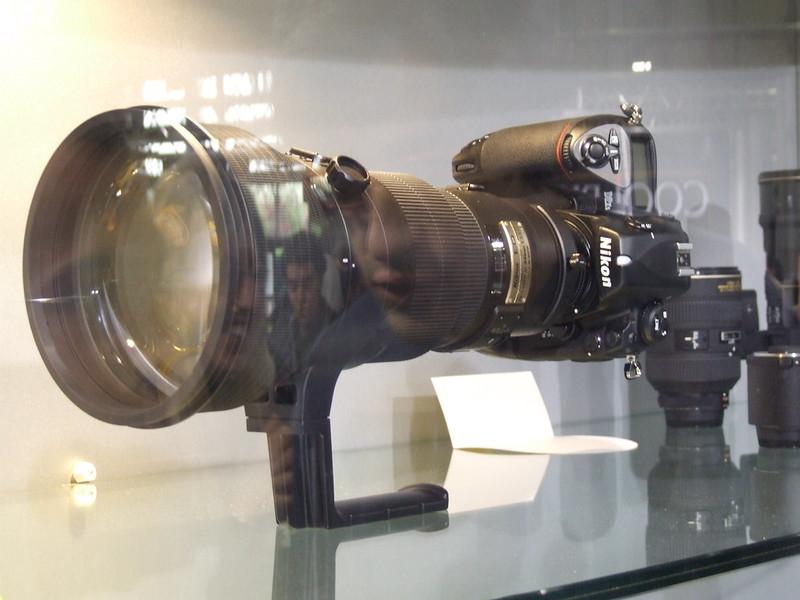
The difference, in their photographs
Reading both sets of photographsWhere to buy
The look of their photographs
Each Camera Signature is the colour, tone and shooting habits of real photographs, as numbers. The tone histograms share one scale, so their heights can be compared.
D40x
1000 photos by 39 photographers
Colours
- #cacbcb, 26%
- #272627, 25%
- #6b675e, 24%
- #788eac, 16%
- #a99652, 5%
- #964828, 4%
Tone
Average brightness 47%, contrast 85%, 1% of pixels clipped to black and 3% to white.
Tendencies
Warmthleans warm (0.09)
Tintleans magenta (0.05)
Saturation18%
How it is shot
ISOmedian 200
- ISO 400 and under: 88%
- ISO 800 – 3200: 12%
- ISO 3200+: 0%
Aperturemedian f/6.3
- f/2 and wider: 2%
- f/2.1 – f/5.6: 47%
- f/5.7 and narrower: 51%
Focal length (35 mm equivalent)median 53 mm
- Wide: 24%
- Standard: 57%
- Telephoto: 20%
D2xs
176 photos by 130 photographers
Colours
- #434b55, 27%
- #666f7f, 24%
- #16161a, 19%
- #8f8477, 14%
- #c8c6c6, 10%
- #67542a, 6%
Tone
Average brightness 37%, contrast 75%, 4% of pixels clipped to black and 1% to white.
Tendencies
Warmthleans cool (-0.06)
Tintleans magenta (0.01)
Saturation16%
How it is shot
ISOmedian 200
- ISO 400 and under: 88%
- ISO 800 – 3200: 13%
- ISO 3200+: 0%
Aperturemedian f/6
- f/2 and wider: 5%
- f/2.1 – f/5.6: 44%
- f/5.7 and narrower: 51%
Focal length (35 mm equivalent)median 274 mm
- Wide: 11%
- Standard: 18%
- Telephoto: 71%
Each Signature draws on up to 1,000 of a camera’s newest photos, spread across as many photographers as possible. It reflects the photographers and their subjects as much as the camera.
Photographs, matched
A fair comparison uses like for like: the filters below apply to every camera at once, so you are looking at the same light and the same field of view.
Specifications
7 differences marked
| Nikon D40x | Nikon D2xs | |
|---|---|---|
| Announced(differs) | 2007 | 2006 |
| Type | Interchangeable lens | Interchangeable lens |
| Sensor(differs) | CCD | CMOS |
| Colour filter | Bayer | Bayer |
| Sensor size(differs) | 23.6 × 15.8 mm | 23.7 × 15.7 mm |
| Crop factor | 1.52× | 1.52× |
| Resolution(differs) | 10.2 MP | 12.4 MP |
| ISO(differs) | 100–1600 | 100–800 |
| Extended ISO | 100–3200 | n/a |
| Fastest shutter(differs) | 1/4000 sec | 1/8000 sec |
| Weight(differs) | 522 g | 1070 g |