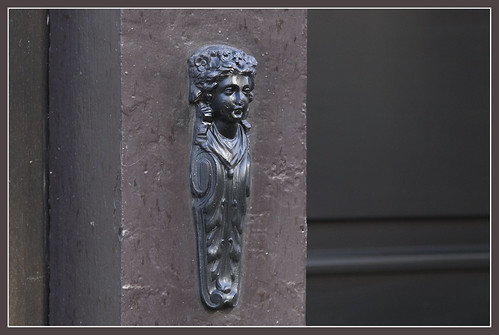
Nikon D70s
- 2005
- APS-C
- 23.7 × 15.6 mm
- Bayer CCD
- 6.1 MP
- ISO 200–1600
- 679 g

Camera Signature
830 photos · 49 photographersWarm · Vivid · Low-key
- #5f5947, 29%
- #1f1b19, 28%
- #c3c1ba, 20%
- #628098, 11%
- #7f8440, 9%
- #a34a2d, 4%
Tone
The Reflectr read
The D70s is a 6.1 MP CCD DSLR from 2005 that is built solidly and rewards photographers who take the time to learn it. Photographs made with it tend to be warm, vivid and fairly dark, mostly at low ISO.
Based on 830 photographs by 49 photographers on Reflectr and 5 cited sources. Updated November 2026.
How its photographs look
Photographs made with the D70s on Reflectr lean warm (0.29) and more vivid than most cameras in the catalogue (saturation 0.23), with a neutral tint. The overall look is low-key: mean brightness is 0.39, 46% of pixels fall in the shadows and only 15% in the highlights, with contrast at 0.82 and 4% of pixels pure black. The dominant colours are a dark olive brown, near black, a pale warm grey, a muted sky blue, an olive green and a smaller share of rust red. Owners mostly shoot at low sensitivity: the median is ISO 200, 79% of frames are at ISO 400 or below and none are above ISO 3200. The median aperture is f/5.6, with 40% at f/5.7 or narrower, and the median shutter speed is 1/200 s. Focal lengths (35 mm equivalent) centre on 77 mm, split 42% standard and 40% telephoto, with 18% wide.
What it does best
- Solid, durable buildReviewers and owners praise the construction, with TechRadar finding nothing in its price range that felt as solid and one owner calling it "built like a brick"12.
- Fast shutter and flash syncThe 1/8000 s top shutter speed and 1/500 s flash sync were praised, with CNET calling the sync significantly faster than competitors'