Nikon D5100
- 2011
- APS-C
- 23.6 × 15.6 mm
- Bayer CMOS
- 16.2 MP
- ISO 100–6400
- 560 g

Camera Signature
1,000 photos · 120 photographersWarm · Vivid · Low-key
- #221e20, 29%
- #c2c2c1, 23%
- #707179, 22%
- #625835, 13%
- #a7a052, 9%
- #ad4d36, 5%
ToneShadows 41%Highs 20%Tonal histogram: 41% shadows, 40% midtones, 20% highlights.
Colour
Typical settingsISO 220f/5.677 mm
The read compares this camera with the rest of the catalog.Full Signature ↓
The Reflectr read
The Nikon D5100 is a 16.2 MP APS-C DSLR from 2011 with an articulating screen and image quality that reviewers placed close to Nikon's more expensive D7000. It suits a photographer who wants good results from a simple body and is content with limited physical controls.
Based on 1,000 photographs by 120 photographers on Reflectr and 5 cited sources. Updated November 2026.
How its photographs look
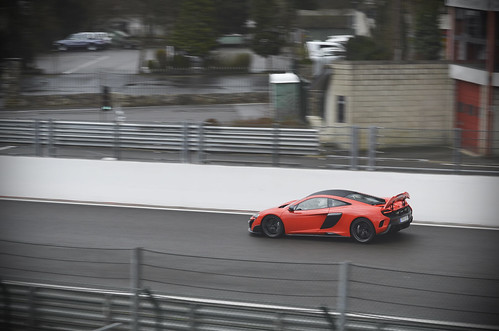
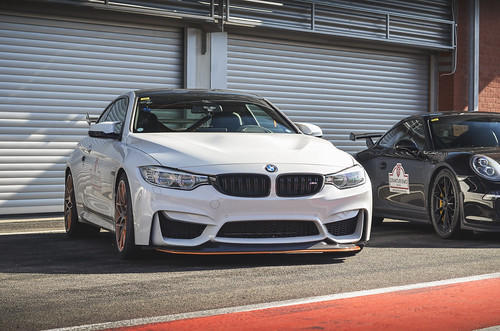
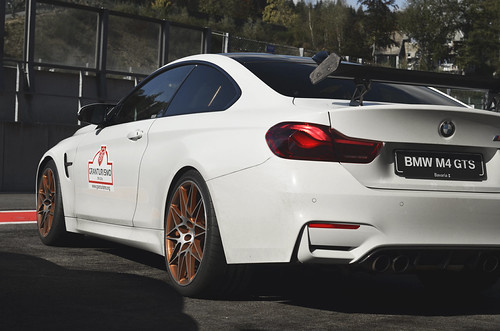
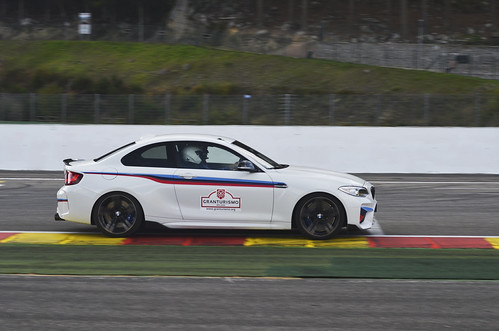
Photographs made with the D5100 tend to be warm and fairly vivid, with a warmth of 0.29 and saturation of 0.24, both above most cameras in the catalogue. Brightness is typical at a mean of 0.42, with contrast of 0.84 and a tonal split of 41% shadows, 40% midtones and 20% highlights. Only 3% of pixels are pure black and 1% pure white. The dominant colours are near-black, pale grey, a slate blue-grey, olive brown, a muted yellow-green and a brick red. Its owners mostly shoot in good light: the median ISO is 220 and 70% of frames are at ISO 400 or below, with just 1% above ISO 3200. The median aperture is f/5.6 and the median shutter speed 1/160 s. The median focal length is 77 mm equivalent, with 46% standard, 35% telephoto and 19% wide. The kit 18-55 mm is the most used lens at 26%, followed by the 55-200 mm at 16%, the 18-105 mm at 11% and the 50 mm f/1.8 at 11%.
What it does best
- Image quality beyond its classDPReview called image quality the D5100's trump card, with effectively the same quality as the higher-end D70001.
- Clean results at high ISODPReview saw some of the best image quality it had seen from an APS-C camera at higher ISOs1. PCMag measured noise below 1.5 percent up to ISO 64002.
- A much improved articulating screenPCMag described the 921K-dot articulating LCD as a huge leap forward over the D5000's low-resolution screen2.
Where it falls short
- No built-in autofocus motorAutofocus with D-type or older lenses is not possible, so it depends on lenses that carry their own motor1.
- Limited controls, plastic buildReviewers listed limited physical controls, a single control dial and plastic construction as cons4. Engadget's roundup also called the body plasticy5.
- Live View focus and quirksPCMag found Live View continuous autofocus slow2, and DPReview said it still trails mirrorless rivals1. DPReview also noted no exposure-level indicator in manual Live View and an aperture-lock quirk1.
- May be outgrown quicklyDPReview warned that an enthusiastic beginner might outgrow it faster than some of the competition1.
Who the D5100 is for
It suits an enthusiastic beginner or a step-up buyer who wants strong image quality in a compact DSLR and mostly shoots in daylight with kit zooms or an inexpensive fast prime. Photographers who want fast handling with more physical controls, or who rely on older autofocus lenses without a motor in the lens, should look at a higher Nikon body or another system. Those who want quicker autofocus and more resolution may prefer its successor, the D5200, which moved to 24MP, a 39-point AF system and 5 fps3.
A capable, good-value DSLR for image quality, held back by sparse controls and the lack of an autofocus motor. Best for those who value the files over the handling.
Sources
- 1Nikon D5100 In-depth Review | DPReview · dpreview.com
- 2Nikon D5100 · uk.pcmag.com
- 3Nikon D5200 review · techradar.com
- 4Nikon D5100 | PetaPixel · petapixel.com
- 5Nikon's D5100 impresses, captures children's birthday parties with incredible clarity - Engadget · engadget.com